
Most american travelers believe car rental is confusing or expensive, but the reality is quite different. With more than two million vehicles available for rent across the country, car rental services have become a straightforward and flexible solution for work and personal trips. Understanding the facts can help you sidestep outdated myths and make smarter choices, whether you need a car for a weekend or a longer journey.
Table of Contents
- Defining Car Rental And Common Misconceptions
- Types Of Car Rental Services Explained
- How The Car Rental Process Works
- Legal Requirements And Rental Policies
- Costs, Insurance, And Financial Responsibilities
- Mistakes To Avoid When Renting A Car
Key Takeaways
| Point | Details |
|---|---|
| Flexible Rental Options | Car rental services now offer a variety of duration options, from hourly to weekly, catering to diverse customer needs. |
| Digital Transformation | Modern booking processes are streamlined through online platforms, enhancing convenience and accessibility for users. |
| Understanding Costs | Renters should be aware of various fees and insurance options to avoid unexpected charges during their rental experience. |
| Avoiding Common Mistakes | Travelers can minimize financial risks by being thorough in vehicle inspections and understanding rental terms before signing agreements. |
Defining Car Rental and Common Misconceptions
Car rental is a flexible transportation service that allows individuals to temporarily lease a vehicle for personal or professional use, typically for short periods ranging from a few hours to several weeks. Unlike traditional vehicle ownership, car rental provides an adaptable solution for travelers, business professionals, and individuals needing temporary transportation without long-term commitments.
The concept of car rental has dramatically transformed with digital technological advancements, enabling seamless online booking and enhanced customer experiences. Modern car rental systems now leverage web platforms that streamline reservation processes, vehicle selection, and payment transactions, making the entire experience more convenient and user-friendly. These digital platforms have revolutionized how customers interact with rental services, reducing administrative overhead and providing instant accessibility.
Common misconceptions about car rental often stem from outdated perceptions or limited understanding of the industry’s evolution. Many people incorrectly assume that car rental is prohibitively expensive or complicated. In reality, notification technologies and web-based systems have simplified the process, offering transparent pricing, instant availability checks, and flexible rental options. Customers can now receive automatic SMS alerts about vehicle availability, compare prices quickly, and complete entire rental processes through user-friendly digital interfaces.
The key aspects that define modern car rental include:
- Flexible rental durations (hourly, daily, weekly)
- Wide range of vehicle options
- Transparent pricing models
- Digital booking and management platforms
- Comprehensive insurance coverage
- Convenient pickup and drop-off locations
Understanding these characteristics helps travelers make informed decisions and leverage car rental services effectively for various transportation needs.
Types of Car Rental Services Explained
Car rental services have evolved significantly, offering diverse options to meet the unique transportation needs of different travelers and consumers. Traditional car rental agencies remain a primary service, providing customers with the ability to rent vehicles directly from established companies with extensive vehicle fleets. These traditional services typically offer a wide range of vehicle types, from compact cars to luxury sedans and SUVs, catering to various preferences and budgetary requirements.

Peer-to-peer carsharing represents an innovative approach in the rental ecosystem, emerging as part of the collaborative consumption movement. This model allows individual vehicle owners to rent their personal cars to other individuals through digital platforms, creating a more flexible and community-driven rental experience. Unlike traditional rental agencies, peer-to-peer services leverage digital booking systems and telematics to manage fleet availability and facilitate seamless transactions between vehicle owners and renters.
Modern car rental services can be categorized into several distinct types:
- Traditional Rental Agency Services
- Corporate rental companies (Enterprise, Hertz)
- Airport-based rental locations
- Long-term and short-term rental options
- Peer-to-Peer Rental Platforms
- Community-driven vehicle sharing
- Flexible rental durations
- Often more cost-effective
- Subscription-Based Car Services
- Monthly vehicle access
- Includes maintenance and insurance
- Flexibility to switch vehicles
- Hourly Car Sharing Services
- Urban-focused rental options
- Ideal for short-distance travel
- Typically includes parking and fuel
Each rental service type offers unique advantages, enabling consumers to select the most appropriate option based on their specific travel requirements, budget constraints, and personal preferences. Understanding these diverse rental models helps travelers make informed decisions about their transportation needs.
How the Car Rental Process Works
The car rental process is a systematic approach designed to provide customers with temporary vehicle access through a straightforward series of steps. Typically, the journey begins with researching and selecting an appropriate rental service that matches your specific transportation requirements, budget, and preferred vehicle type. Essential tips for smooth car rentals can help travelers navigate this initial selection phase effectively.
Once a rental service is chosen, customers must complete several critical stages. This involves providing necessary documentation, such as a valid driver’s license, proof of insurance, and payment method. Most rental agencies require drivers to be at least 21 years old, with some premium or specialty vehicles demanding drivers be 25 or older. The reservation process can typically be completed online, through mobile apps, or directly at rental agency locations, offering multiple convenient booking channels.
The vehicle pickup process involves a comprehensive inspection and documentation phase. Renters will need to:
- Present required identification documents
- Complete rental agreement paperwork
- Verify insurance coverage
- Conduct a thorough vehicle condition walkthrough
- Document existing vehicle damage
- Understand rental terms and mileage restrictions
After pickup, customers are responsible for the vehicle during the rental period. This includes maintaining the car’s condition, adhering to mileage limits, and returning the vehicle at the predetermined time and location. Most rental agreements include provisions for fuel usage, requiring customers to return the vehicle with the same fuel level as when received. Vehicle rental checklists can help travelers ensure a smooth, stress-free rental experience by providing comprehensive guidance through each stage of the process.
Legal Requirements and Rental Policies
Car rental agreements involve complex legal frameworks that protect both the rental company and the customer. Insurance requirements are perhaps the most critical aspect of these legal considerations, mandating specific coverage levels and documentation. Most rental agencies require drivers to provide proof of personal auto insurance or purchase additional temporary coverage through the rental company to mitigate potential liability risks.
Drivers must meet specific legal qualifications to rent vehicles, which typically include age restrictions and valid documentation. Standard requirements include possessing a valid driver’s license, being over 21 years old (with some premium vehicle rentals requiring drivers to be 25 or older), and maintaining a relatively clean driving record. International motor insurance systems play a crucial role in standardizing insurance documentation, particularly for cross-border vehicle rentals.
Key legal and policy considerations for car rentals include:
- Minimum driver age requirements
- Valid driver’s license documentation
- Personal auto insurance verification
- Rental company supplemental insurance options
- Liability coverage limits
- Restricted driver list specifications
- Vehicle usage restrictions
Most rental agreements include comprehensive policies covering:
- Vehicle damage protection
- Theft prevention measures
- Accident reporting procedures
- Geographic travel limitations
- Fuel replacement requirements
- Additional driver registration rules
Understanding these legal requirements helps travelers navigate the complexities of car rental agreements, ensuring compliance and minimizing potential financial risks during their rental experience. Travel rental best practices can provide additional guidance for managing these intricate legal considerations effectively.
Costs, Insurance, and Financial Responsibilities
Car rental costs extend far beyond the base rental price, encompassing a complex landscape of fees, insurance options, and potential financial obligations. Pricing structures vary widely between rental agencies, typically including daily rates, mileage charges, additional driver fees, and supplementary equipment costs. Travelers must carefully review these components to understand the total financial commitment associated with their vehicle rental.
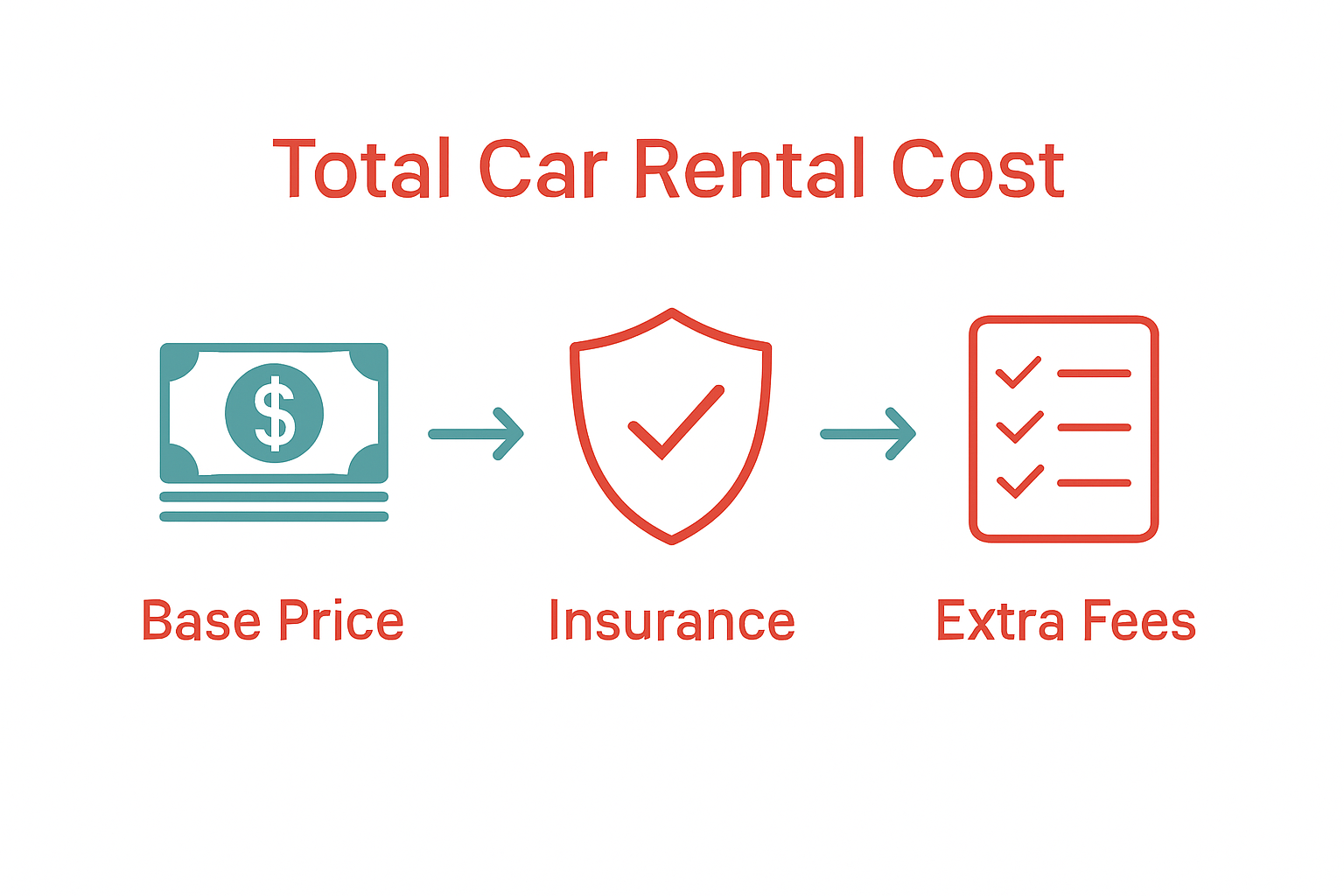
Damage waivers represent a critical financial protection mechanism that renters should thoroughly understand. These optional insurance products cover potential vehicle damage, theft, and liability risks, shifting significant financial responsibility away from the individual renter. Most damage waiver options include protection for accidental damage, towing expenses, and potential loss of vehicle use, providing travelers with comprehensive financial security.
Key financial considerations for car rentals include:
- Base rental rate
- Mileage fees
- Additional driver charges
- Age surcharges for younger drivers
- Insurance coverage options
- Fuel replacement costs
- Equipment rental fees
- Potential damage or repair expenses
Insurance options typically break down into several categories:
- Collision damage waiver
- Liability protection
- Personal accident insurance
- Personal effects coverage
- Roadside assistance plans
Savvy travelers can minimize rental expenses by:
- Comparing multiple rental agency rates
- Understanding included and optional insurance coverages
- Checking credit card rental insurance benefits
- Avoiding unnecessary additional driver fees
- Reviewing fuel replacement policies
- Examining potential hidden charges
Travel rental best practices can help travelers navigate these financial complexities, ensuring they make informed decisions that balance comprehensive protection with cost-effectiveness.
Mistakes to Avoid When Renting a Car
Car rental can be a complex process fraught with potential pitfalls that can significantly increase costs and create unnecessary stress for travelers. Common mistakes often stem from inadequate preparation, overlooking critical details, and failing to understand the nuanced terms of rental agreements. Many travelers inadvertently compromise their financial protection and travel experience by making hasty decisions without thorough research.
Financial miscalculations represent one of the most significant errors travelers make during car rentals. Failing to understand insurance options, overlooking additional fees, and neglecting to compare pricing across multiple rental agencies can result in unexpected expenses. Budget travel rental strategies emphasize the importance of comprehensive financial planning and understanding the complete cost structure before finalizing a rental reservation.
Critical mistakes to avoid during car rental include:
- Skipping detailed vehicle inspection before rental
- Neglecting to document existing vehicle damage
- Failing to understand insurance coverage details
- Overlooking mileage restrictions
- Not checking fuel replacement policies
- Ignoring additional driver fee requirements
- Postponing reservation until last minute
Potential costly errors travelers should prevent:
- Accepting first rental quote without comparison
- Declining additional insurance without understanding risks
- Returning vehicle with insufficient fuel
- Missing return deadline
- Failing to review rental agreement thoroughly
- Not verifying driver’s license requirements
- Disregarding age restriction policies
Careful preparation and understanding rental options can help travelers navigate potential challenges, minimize unexpected expenses, and ensure a smooth, stress-free rental experience. Proactive research and attention to detail are key to avoiding common car rental mistakes.
Discover Stress-Free Car Rentals Tailored to Your Needs
The article highlights common challenges in car rental such as confusing insurance options, hidden fees, and complex booking processes. If you want to avoid costly mistakes and outdated systems, our platform offers a simple and transparent solution designed to give you full control over your rental experience. With flexible options, clear pricing, and digital booking tools, you can easily find the right vehicle for your trip without the typical hassle.

Take the stress out of your next rental by exploring easy-to-navigate listings and secure reservations on Rentngo.biz. Whether you seek traditional rentals, peer-to-peer sharing, or short-term drives, our streamlined process and customer-first policies are here to protect your time and budget. Start your seamless car rental journey now and enjoy the freedom to travel with confidence. Visit Rentngo.biz and experience smart rental solutions built around your needs.
Frequently Asked Questions
What is car rental?
Car rental is a service that allows individuals to temporarily lease a vehicle for personal or professional use, typically for short periods ranging from a few hours to several weeks.
How does the car rental process work?
The car rental process typically involves researching rental options, selecting a service, providing necessary documentation (like a driver’s license and insurance), and completing a reservation either online or in person before picking up the vehicle.
What types of car rental services are available?
Car rental services include traditional rental agency services, peer-to-peer carsharing, subscription-based car services, and hourly car sharing services, each offering different advantages and flexibility for consumers.
What should I avoid when renting a car?
Common mistakes to avoid include skipping a detailed vehicle inspection, neglecting to understand insurance coverage, overlooking mileage restrictions, and not comparing prices across multiple rental options.
Recommended
- Role of Car Rental in Travel: Complete Guide – Rent&Go Car Rental Vlore
- Why Choose Local Vehicle Rentals: Complete Guide – Rent&Go Car Rental Vlore
- Complete Guide to Why Compare Rental Options – Rent&Go Car Rental Vlore
- What Is Boat Rental? Complete Overview for Travelers – Rent&Go Car Rental Vlore
Related Posts

Minimum Age for Car Rental Explained: Key Facts
Most American travelers aged 21 to 25 discover quickly that…

Top Boat Tours Vlore – Expert Comparison 2025
Travel opens up a world of new experiences and even…

Why Use Local Rental Services for Leisure Travel
Most American travelers are surprised to learn that nearly 50…